Quick Nav
- The northern sea gate
- Selecting a Bocas channel
- Current, weather, and chartwork
- The run into Chaguaramas Harbour
- Berths and shoreside services
- The written arrival plan
How the Dragon’s Mouths Became Chaguaramas’ Sea Gate
The Bocas del Dragon have long formed the northern entrance from the Caribbean into the Gulf of Paria. A yacht approaching Trinidad and Tobago from the north or east meets this island chain before it meets the protected water, industrial shoreline, and concentrated marine facilities farther inside.
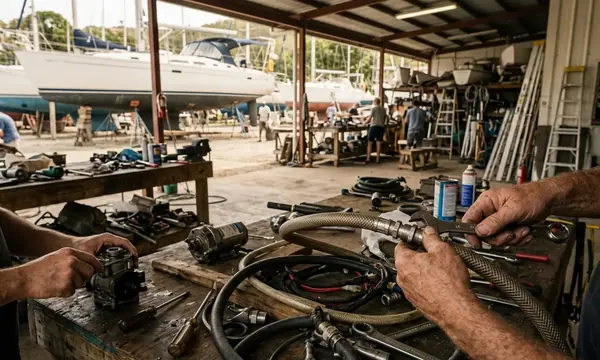
Chaguaramas became the practical destination as the northwest peninsula moved away from its mid-century role as a naval and industrial staging ground. Fuel docks, haul-out yards, chandlery, provisioning, and yacht basins gathered along the same strip. The peninsula now absorbs the majority of recreational traffic entering the Gulf of Paria, so the passage through the Bocas and the arrival in Chaguaramas should be planned as one continuous operation.
The central arrival decision is straightforward: target a daylight transit between 08:00 and 15:00 local time, choose a boca suited to the expected stream and wind, and secure a named berth or anchorage before entering the island chain.
That decision reflects three constraints inherited from the geography. The channels are confined, commercial and recreational traffic share the approaches, and Chaguaramas functions as a dense service cluster rather than an open roadstead. A crew that clears the Bocas without a destination still faces a busy inner approach, a mooring field, and limited time to inspect landing options before dusk.
Where YSATT’s Guidance Ends
YSATT can orient arriving crews to yacht services along the peninsula. Its remit remains separate from state hydrographic work, navigational authority, and official clearance. Service information can help a captain identify fuel, water, haul-out capacity, or shoreside support; it does not replace current charts, entry requirements, or instructions issued by the relevant authorities.
Choosing Between Boca Grande, Navios, Huevos, and Monos
I rank the channels by usable daylight and adverse current before comparing mileage. That order gives Boca Grande a clear role for a first arrival: it offers the widest navigable span and the lowest exposure among these choices to steep standing waves created when wind opposes current.
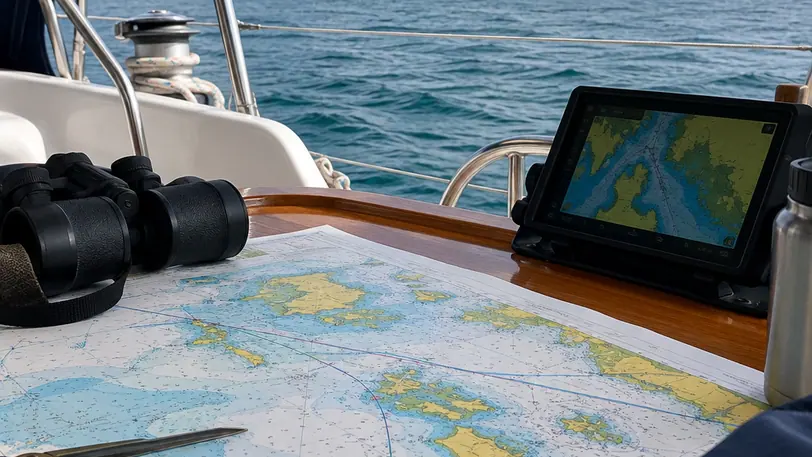
A charted opening may look ample while the sea surface tells a different story. The useful width is the part in which the yacht can hold its intended track against the stream, preserve clearance from rocky shores, and turn without surrendering control. This width-to-current relationship matters more than the visual breadth of blue water on an electronic display.
Boca Grande: The First-Arrival Default
Boca Grande is the broad western entrance beside Chacachacare. Its scale makes the island identification and approach geometry easier to resolve in daylight, while its wider span gives a powered yacht more room to manage set. It also reduces the likelihood of meeting the sharpest wind-against-current seas associated with the narrower eastern slots.
Boca de Navios: Power Before Shortcut
Boca de Navios demands a more exact calculation. A vessel using it must have enough auxiliary power to overcome a 3-knot ebb tide. Attempting the slot under sail alone can leave the yacht unable to hold its line and expose it to the rocky western shores of Chacachacare.
Crews should confirm the opening from charted island profiles and bearings rather than selecting it because a gap appears convenient from offshore. Navios belongs in the plan only after engine capability, stream direction, and the remaining daylight have all been checked.
Boca de Huevos: A Narrower Commitment
Huevos is another confined option among the island passages. It suits a yacht that has positively matched the surrounding island landmarks to an updated chart and has enough time to establish a stable approach before reaching the slot. Its narrower geometry leaves less room to correct a poor line when current and wind oppose one another.
Boca de Monos: Exclude It on a First Entry
Monos lies at the eastern end of the chain near the northwest peninsula. Its tight confines and unpredictable cross-currents make it unsuitable for a first-time arrival. Adequate charted depth does not compensate for reduced manoeuvring room or a late attempt in contrary stream.
Monos Cutoff
Remove Boca de Monos from a first-arrival plan. Default to Boca Grande unless current conditions, daylight, and vessel capability support another named channel.
Finalize the channel choice two to three hours before reaching the islands. That interval preserves enough sea room to alter course rather than forcing a last-minute lateral move along the chain.
Reading Bocas Currents, Trade Winds, and Northwest Charts
Bocas streams can run hard, and their direction may differ from conditions observed farther inside the Gulf of Paria. Transit timing therefore belongs in the passage plan before the yacht leaves its final overnight stop. Waiting until the first island is abeam turns a forecast question into an immediate boat-handling problem.
Daily tide information should guide the estimate, followed by observation on approach. Look for broken water along a channel edge, a wake that shears away from the hull, or a course-over-ground that no longer agrees with the heading. Local stream behaviour can depart from broad seasonal expectations, particularly close to the confined openings.
Season Changes the Approach, Not the Daylight Rule
From January through May, dry-season trade winds tend to provide the most consistent approach conditions. Consistency helps with passage timing, though a steady trade can still oppose the stream and build short, steep water at a boca.
Wet-season planning places more weight on squall visibility and abrupt wind changes. A dark rain line can obscure island separation at the point when those profiles are most useful. In either season, a first transit should remain a daylight event.
Cross-Checking the Plot
Use current official charts covering both the Bocas and the Gulf of Paria. Cross-reference the electronic plot against updated paper folios or a second digital source because datum shifts are known off the northwest peninsula. The check should include the approach line, channel margins, clearing bearings, and the route onward into the gulf.
- Mark the chosen boca and a course-correction point outside the island chain.
- Record the expected stream and the engine power needed to hold the planned line.
- Plot the post-transit course toward Chaguaramas before entering confined water.
- Set a daylight cutoff that leaves time to wait offshore or return to the overnight plan.
Managing Traffic and VHF on the Run into Chaguaramas
After the chosen boca, the passage character changes. The yacht enters the Gulf of Paria, encounters a longer fetch, and begins to resolve the northwest-peninsula skyline. The water feels less confined, yet the route toward the Chaguaramas bays brings the vessel closer to commercial movements and local workboat traffic.
Hold a deliberate track clear of commercial lanes rather than cutting directly toward the first visible masts. The intended bay, marina, or club should already be marked on the plot. Visual confirmation of the harbour approaches then triggers the communications sequence.
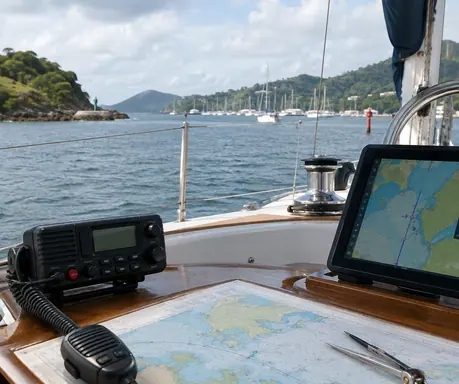
- Maintain a listening watch on VHF 16 while approaching the peninsula.
- Confirm that the visible shoreline and harbour landmarks agree with the plotted position.
- Make the initial call, then change to the intended marina or club’s working channel when directed.
- Confirm the berth, landing side, and any final approach instruction before entering the inner bay.
Initial contact and berth confirmation typically take place 15 to 30 minutes before entry into the inner bay. Calling too early can create uncertainty about the yacht’s position; calling after entering the packed basin leaves little time to rig lines and fenders.
The Last Half-Mile
Chaguaramas combines haul-out yards, workboats, marina traffic, and tightly arranged yacht basins. Enter at strict no-wake speed. A slow approach gives the crew time to identify moving traffic and prevents wash from travelling through occupied slips.
Prepare the agreed landing side before the turn into the basin. Fenders should be set for the expected dock height, lines led clear, and one crew member assigned to communicate changes. Searching for an unconfirmed gap while manoeuvring among moored yachts is a poor substitute for berth instructions received outside.
Matching a Chaguaramas Berth to the First Night Ashore
A reserved marina berth provides the most direct arrival: the landing side can be agreed in advance, shore access is defined, and the crew can move promptly into clearance and provisioning tasks. The trade-off is the precision required during the final basin manoeuvre.
A club dock may offer a similarly clear destination, though the approach and reception arrangements should be confirmed before arrival. A designated anchorage requires a different calculation. The captain must assess holding, surrounding vessels, and swing room rather than treating the first open patch of water as available.
Distance also matters. A legal berth with awkward access to clearance, fuel, or a haul-out yard may consume the remaining daylight in tender movements. Newly arrived crews should prioritize immediate functions over long-term refit questions:
- fuel appropriate to the yacht’s onward plan;
- potable water access;
- chandlery for arrival-related replacements;
- haul-out access when inspection or work on the hard is already required;
- crew provisioning along the Chaguaramas strip.
These facilities sit within a contiguous service zone, one reason Chaguaramas works well as an arrival base. The concentration shortens the distance between fuel docks, water access, yards, and suppliers, but it also channels traffic into the same shoreline corridor.
YSATT as a Service Orientation Point
YSATT serves as the yacht-services industry association within this setting. It can help visitors understand the range of services available along the peninsula and distinguish a fuel stop from a yard visit or a longer period on the hard.
The association does not assign moorings or issue entry permits. Captains remain responsible for securing a legal berth and following the applicable clearance process, including the current Single harmonised Immigration clearance form where required. Arrival between 16:00 and 18:00 should already include a confirmed destination; that period leaves little margin for navigating a mooring field before darkness.
Lock In the Boca, VHF Order, and Chaguaramas Destination
The final passage decision belongs in writing. Log it 12 to 24 hours before departure from the last overnight anchorage, while there is still time to change the sailing schedule without pressure from a closing daylight window.
Write down four items:
- the specific boca the yacht will use;
- the planned daylight transit window;
- the order of the VHF calls, beginning with a watch on channel 16;
- the named marina, club, or designated anchorage receiving the yacht.
Do not enter the Bocas after that window has slipped. Hold or return to the overnight plan, revise the timing, and make the daylight transit with the chosen channel and Chaguaramas destination written into the vessel’s passage plan.