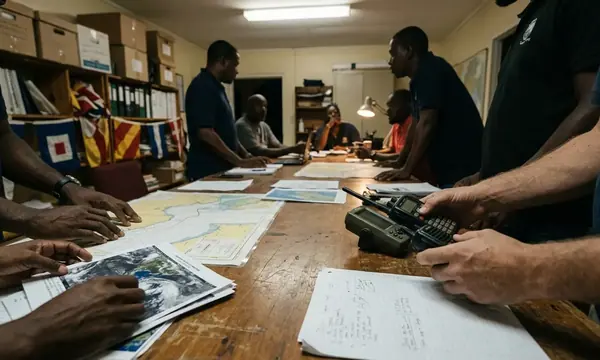
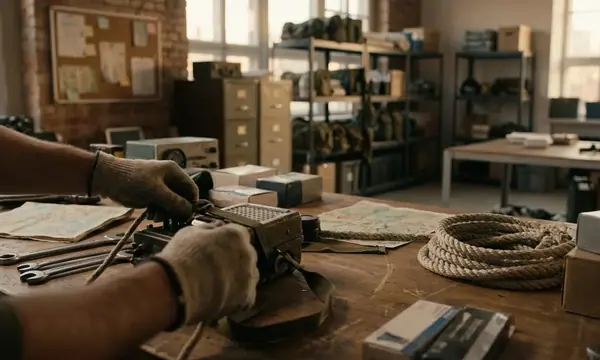
Three Facts That Decide Duty Before the Crate Is Opened
A cruising yacht lies afloat alongside the customs reception quay at Chaguaramas. On the sun-bleached concrete sits a stamped plywood shipping crate containing a high-output marine alternator. Before cutting the steel strapping on that box, the skipper holds the vessel's inward inventory beside the courier's waybill to verify that the unit is logged as ship's stores in transit rather than general domestic freight.
Duty assessment at that exact moment turns on three strict criteria: active temporary admission of the hull itself, an explicit line-item declaration of any gear that is not already fitted ship's equipment, and an outward inventory record that reconciles with the vessel on departure. Cutting the straps before matching the paperwork breaks the chain connecting the arriving hardware to the yacht in transit.
Pre-Unstrapping Clearance Verification
- Hull Admission Status: Verify that the yacht holds active temporary admission on the Single harmonised Immigration clearance form and accompanying customs entry documents.
- Line-Item Spare Declaration: Confirm that non-fitted spares, boxed parts, and separately freighted equipment appear explicitly on the vessel's inward stores manifest.
- Departure Reconciliation Path: Maintain serial-number records so both newly installed components and removed cores match the ship's file when clearing out.
A Visiting Yacht and a Permanent Import Are Not the Same Admission
Temporary importation grants a visiting vessel and its declared equipment admission into Trinidad and Tobago for a limited stay, under the explicit condition that the hull and all associated gear will depart the jurisdiction together. Permanent importation occurs the moment a yacht, a replacement part, or a piece of shipboard hardware is retained locally, sold, transferred to another party, or left ashore rather than exiting aboard the vessel.
In operational practice, customs classification hinges on three markers: the declared intention at arrival, physical custody of the hardware during the boatyard or anchorage period, and physical verification at departure that both old and new units leave with the hull.
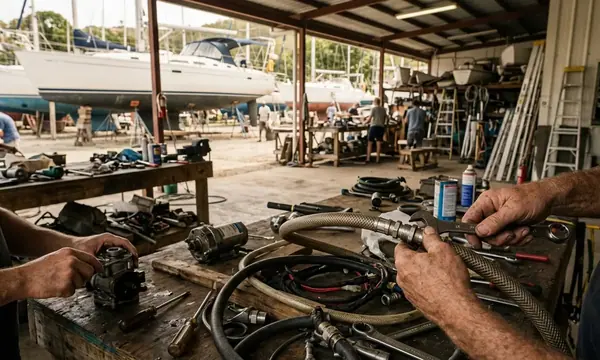
Consider the alternator crate on the Chaguaramas quay. Once the new unit is bolted onto the engine block, the skipper faces a decision regarding the burned-out alternator core. Leaving that old core with a shore-based machinist in Port of Spain as partial payment for labor or scrap value may look like a simple yard transaction. In regulatory terms, once an old alternator core or spare part is left with a Trinidad machine shop instead of re-boarding the hull, temporary vessel admission ends and domestic import rules attach. Any transfer of title, local sale, or unrecorded shore abandonment shifts the hardware from temporary yacht stores into domestic commerce, triggering standard import duty and tax liabilities.
Onboard Gear That Still Needs a Declaration
During an initial inward boarding inspection, clearance officers distinguish between equipment permanently bolted to the vessel and loose inventory carried in storage lockers. Hardware already fitted and operating—such as the primary propulsion engine, helm chartplotters fixed in the pod, and working sails bent onto the spars—travels as integral ship's equipment. Spares stowed in original factory packaging, components shipped separately via air or sea freight, and gear acquired after arrival require separate line-item scrutiny.
Cruisers preparing their inward manifests must account for four distinct clearance states for marine gear in Chaguaramas: factory-fitted ship's equipment, boxed onboard spares, separately freighted transit parts, and shore-landed repair cores. During boarding inspections, high-scrutiny onboard categories include:
- Propulsion engines, generators, and high-output alternators
- Radar domes, chartplotter displays, and navigation electronics
- Bagged spare sails and storm canvas
- Liferafts and serialized safety equipment
- Specialized mechanics' and diagnostic tools
- Boxed high-value spares, such as raw-water pumps and autopilot drives, stowed in factory cartons under a berth

A clear boundary also separates legitimate yacht equipment from personal effects and commercial cargo. Personal clothing and basic cabin provisions belong to the crew's baggage allowance. Conversely, parts carried aboard for delivery to another yacht, gear brought in for dockside sale, or equipment intended for use ashore fall completely outside the visiting yacht's temporary admission umbrella. Reconciling an undeclared factory-boxed part discovered during an outward search routinely delays vessel departure clearance while boarding officers trace the original landing path.
Records That Have to Travel With the Yacht
Maintaining duty-free transit status requires a physical paper trail that stays aboard the vessel from initial arrival until final departure clearance. I structure the onboard clearance binder around four primary documents so that any boarding officer can trace the custody of high-value hardware in minutes.
- Stamped Entry Declaration: The foundational inward customs and Single harmonised Immigration clearance form establishing the vessel's temporary admission date and port of entry.
- Itemized Equipment Inventory: The complete list of declared onboard spares, bagged sails, and detachable gear submitted at arrival.
- Proof of Prior Ownership: Commercial invoices, bills of sale, or shipping manifests showing where and when high-value spares were purchased prior to entering Trinidad and Tobago waters.
- Serial Number Registry: A dedicated sheet logging the stamped chassis or housing serial numbers for engines, alternators, liferafts, and boxed electronics.
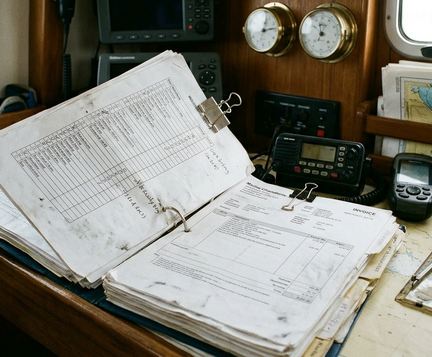
This onboard file is a living record rather than a static entry receipt. Whenever a heavy component is unbolted while the boat is on the hard or afloat and sent to an electrical or machine shop ashore for overhaul, the skipper must log a formal amendment note in the clearance binder. The same amendment requirement applies when a replacement unit arrives via courier and sits in a bonded warehouse awaiting clearance, or when damaged gear is shipped out of the country ahead of the yacht.
Before shifting the vessel from Chaguaramas to an anchorage in Scotland Bay or sailing across to Tobago, hand a complete paper duplicate of the updated clearance binder to the shore-based yacht agent or an authorized representative ashore. Keeping a synchronized duplicate ashore prevents severe clearance stalls if the shipboard folder is damaged by saltwater or misplaced during coastal passages.
Moves That Keep Parts From Drawing Duty or Delay
Preventing customs delays during a refit or repair stop depends on executing procedural steps in the exact order required by port authorities. Follow a strict operational sequence whenever handling high-value spares.
Step 1: Declare Separately Shipped Spares Before Unloading
Never treat an unopened shipping crate arriving by courier as invisible ship's gear. To keep a separately air- or sea-freighted spare under the yacht's duty-free umbrella, present the airway bill and the vessel's original entry paperwork at the customs dock office before the crate touches the boatyard floor. Confirm the clearance conditions in force on the day the spare is landed before the crate is opened, because those conditions govern that landing. Pre-unloading declaration links the arriving box directly to the hull in transit.
Step 2: Track Shore-Landed Repair Cores
Do not sell, lend ashore, or abandon damaged equipment without formally applying to change its customs status and paying any applicable duties. When a part is landed for repair at a local facility, keep that item on the vessel's active record until it either returns aboard or leaves the country via a declared export route.
Step 3: Build the Outward Check from the Inward Inventory
Prepare for departure by auditing the physical boat against the initial inward declaration and its subsequent amendment notes line by line. Every piece of hardware admitted with the hull or cleared in transit during the stay must be accounted for before requesting the final boarding inspection.
The Same Crate, Closed, on the Way Out
On the morning of departure from the Chaguaramas quay, the skipper stands over the open engine room hatch and the re-strapped plywood crate alongside the boarding officer. Bolted to the engine block is the new alternator, its stamped brass serial plate matching the transit amendment sheet inside the ship's canvas folder. Sealed inside the outgoing plywood crate is the burned-out core, logged on the outward inventory for return shipment, matching the physical hardware aboard to the entry file line for line before the mooring lines are cast off.