Quick Nav
- Predawn decision off Store Bay
- Charlotteville swell and the cycling pump
- Daylight passage south to the Bocas
- Repair confirmation from Chaguaramas
- Miles traded for protected water
- A reusable Store Bay decision check
First Light Off Store Bay and the Three Calls That Mattered
Between 0430 and 0515 hrs, the view from the companionway had become more useful than the previous forecast. The breeze was backing, the glass no longer described what was happening outside, and the dinghy remained secured in its chocks. There would be no casual launch for an early run ashore.
The verdict came quickly. The Tobago stopover would survive only if the roadstead remained comfortable enough for rest, a shore desk could confirm a service slot, and Tobago still fitted the boat’s next Eastern Caribbean leg. By first light, all three questions were connected.
The case produced three holdings worth carrying into another passage:
- Do not spend a night in a working swell merely to preserve a scenic waypoint.
- Confirm the yard, mechanic’s bench, or parts counter before committing the last useful daylight.
- Treat Trinidad and Tobago as one flexible cruising circuit rather than two fixed itinerary pins.
That third point matters more than it first appears. Many route plans place Tobago before Trinidad because the order looks clean on a chart or follows the imagined sequence of a holiday. A cruising boat answers to a different order: exposure, machinery, daylight, fuel, water, clearance, then preference. Reversing the island sequence can preserve the whole cruise when the original order has become operationally weak.
The Stopover Threshold
I would frame the Store Bay decision as a threshold rather than a vote between attractive destinations. A usable Tobago night needed adequate roadstead comfort and a boat capable of remaining self-sufficient. Once both conditions weakened together, the value of the stop fell sharply.
Three Early Signals
A backing breeze, a forecast mismatch, and a dinghy still in its chocks formed one coherent message: pause the shore plan and reassess the route before daylight began to drain away.
Charlotteville Swell and a Pump That Would Not Hold Pressure
The evening plan had been modest: spend the night in Tobago, walk ashore in the morning, then make the later hop toward Trinidad and the Windwards. It required a settled anchorage and a routine domestic-water system. By morning, the crew had neither.
A residual northerly swell of roughly 1.5 to 2 metres had turned the intended anchorage into a working roadstead. At the same time, the freshwater pump was cycling every three to five minutes without delivering line pressure. Each symptom deserved attention on its own. Together, they changed the routing problem.
Why the Two Faults Compounded
A cycling pump can point the crew toward several physical checks, but diagnosis still demands a stable place to listen, isolate the system, inspect connections, and assess the water margin. Repeated vessel movement makes that work slower. It also divides attention between the machinery fault and the ground tackle.
The swell imposed a second cost through sleep. A crew that spends the night monitoring motion and anchor behaviour reaches the next day with less capacity for repair work and navigation. The morning walk ashore could no longer justify that bargain.
Charlotteville and Tobago’s other open bays retain their cruising value in a clean weather window. In residual northerly swell, however, an open roadstead cannot provide the same working conditions as protected water with access to a confirmed bench. The distinction is physical: hull motion, exposure, and the ability to place tools or components where they will stay put.
Protect the Ground Tackle
A scenic night becomes expensive when the crew must divide attention between a cycling pump and an anchorage working in some 1.5 to 2 metres of residual swell. Clear water under the keel does not remove the load on the ground tackle.
The Decision Before the Diagnosis
The crew did not need a complete pump diagnosis to choose the safer work platform. It needed evidence that the fault was persistent, that pressure was absent, and that the anchorage would make investigation harder. Those observations were already available.
This is where passage planning and maintenance overlap. The immediate technical question concerned water pressure. Where that question could be answered without adding an exposed night was the routing question.
South Through the Galleons Passage While Daylight Remained
The recast began with three helm decisions in sequence: abandon the Tobago night, hold sea room off the southwestern coast, and enter the Galleons Passage during the remaining daylight. The available window amounted to something like six to eight hours. Waiting for a prettier morning would have preserved the itinerary while surrendering the strongest operational asset still available that day.
What Changed at Chaguaramas
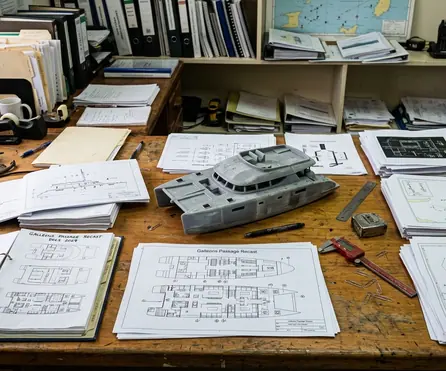
Before committing, the calculation covered fuel and water margins for the 50-nautical-mile crossing to the Bocas. The freshwater fault made the second margin especially important. Tank contents and pump delivery are different measures; water aboard has limited practical value when the pressure system cannot deliver it normally.
Sea Room Before Course Economy
Holding sea room off Tobago’s southwestern coast gave the navigator time to observe the conditions and settle the boat onto the revised route. It also avoided turning a schedule change into a hurried coastal manoeuvre. The objective was a controlled departure from the roadstead problem, followed by a daylight approach to the Passage.
Inside the Bocas, Chaguaramas offered protected water and a realistic prospect of placing the pump in front of a mechanic. Remaining in Tobago would have retained the postcard stop and postponed the repair. The comparison therefore rested on workability rather than island preference.
A Reversible Island Sequence
The Tobago call remained recoverable. After repair and crew rest, the boat could reconsider Tobago during a cleaner weather window and with its domestic-water system restored. This reversibility changes how I read the route: Trinidad–Tobago–Windward and Tobago–Trinidad–Windward are alternatives within one cruising area, provided clearance and weather support the chosen order.
The passage south did not erase Tobago from the plan. It moved Tobago behind the conditions required to enjoy it safely.
Commit Before Dusk
Calculate the daylight remaining to reach the Bocas del Dragón, then test the fuel and water margins for the immediate 50-nautical-mile crossing. A vague intention to continue south carries less value than a route written against the hours still available.
The Night Message That Made Chaguaramas a Repair Destination
Protected water solved only part of the problem. Chaguaramas also needed to offer an open bench and access to parts when the yacht arrived. The communications sequence established that before the vessel committed to the Passage.
A night email went to a Chaguaramas shore desk at 2100 hrs. At 0730 hrs, the skipper followed with a VHF channel 68 check. The response confirmed that a mechanic’s bench and parts counter would be open on arrival.
From Harbour Name to Working Plan
That confirmation converted Chaguaramas from a protected point on the chart into a plausible repair destination. Without it, the boat could still have reached calmer water, yet the pump fault might have remained unresolved through another operating cycle. The message tied the route to an available pair of hands and a parts source.
Timing mattered. Contact was made before the passage commitment because a late refusal, closure, or unanswered call would have changed the value of turning south. A night-responsive yacht-services contact can relay working hours, identify an active service bench, and narrow the search after arrival. Association desks, yards, and agents perform that limited coordination role across Trinidad and Tobago.
The scope has firm boundaries: those contacts do not replace the skipper’s independent weather call, and they do not clear the vessel with Customs and Immigration. Roadstead conditions still require direct judgment, informed where useful by the Trinidad and Tobago Meteorological Service. Likewise, arrival formalities remain with the proper authorities and sequence, including the applicable Single harmonised Immigration clearance form.
Confirm the Bench
Send the night message while alternatives remain open. Ask whether the relevant mechanic’s bench or parts counter will be operating on arrival, then verify the answer by VHF or phone before entering the passage.
Forty-Five Extra Miles Bought Protected Water and Crew Rest
The immediate log gained approximately 45 open-water miles. Tobago lost one planned night. In return, the pump could be addressed in protected water, and the crew recovered rest before the next weather window.
Those terms make the trade unusually clear. Miles consume fuel, water, time, and attention, all of which had to be checked before departure. A second night in swell would have consumed rest while leaving the pressure fault unresolved. It would also have kept the boat exposed while one domestic system remained unreliable.
- The repair moved from a rolling roadstead to protected water.
- The mechanic’s bench and parts counter had been confirmed before arrival.
- The crew could rest without the same northerly swell governing the night.
- The Tobago visit shifted to a later weather window rather than disappearing.
The extra distance therefore purchased options. A rested crew with a functioning pump could choose the next leg from a stronger position. A tired crew in a working anchorage would have faced the same defect with fewer useful choices.
What the Recast Left Untouched
Port formalities remained mandatory and had to occur in the correct order. Altering the arrival port did not create permission to bypass clearance. Any later return to Tobago also required its own suitable weather window and route assessment.
The recast succeeded because it was narrow. It changed the sequence and accepted additional mileage; it did not blur the distinction between service coordination, navigation, and legal arrival procedure. That separation is particularly important around an established yacht-services centre, where access to yards, agents, or a Bonded warehouse can create a false sense that every administrative step is being handled by the same desk.
The Margin the Next Skipper Can Build Between Store Bay and the Bocas
The reusable lesson begins 12 to 24 hours before arrival. Draft an alternative route while the preferred Tobago night still looks possible. The written alternative should include the Galleons Passage, the daylight required to use it, and the fuel and water margins for the 50-nautical-mile crossing.
Navigator’s Galleons Passage Recast Checklist
- Read the swell on the intended roadstead. Record direction and amplitude, then compare those observations with the forecast rather than relying on the forecast alone.
- Calculate daylight to the Bocas del Dragón. Work from the hours actually remaining, including the time needed to clear the Tobago coast with sea room.
- Verify fuel and water margins. Include the immediate crossing and account for any system fault that limits access to water already aboard.
- Name the shore contact. Keep an email address and a VHF or phone route for someone able to confirm operating hours after dark.
- Confirm the repair destination. Ask for an open mechanic’s bench or parts counter before treating protected water as a complete solution.
- Preserve the clearance sequence. Keep Customs and Immigration requirements separate from communications with yacht-services desks or agents.
- Write Tobago back into the route. Define the conditions under which the island call can be recovered after repair and rest.
A missed Tobago sunset does not mark a routing failure. Arriving tired, unrepaired, and exposed carries the more serious consequence. That distinction helps resist the pressure to defend an itinerary after its supporting conditions have changed.
Read Geography as Shelter
Store Bay, Charlotteville, the Galleons Passage, and Chaguaramas should be read as different operating environments within the same national cruising circuit. The route between them can respond to swell direction, daylight, and machinery state without turning the passage into an improvised retreat.
The geographic fact is decisive: once a yacht passes through the Bocas del Dragón, Chaguaramas lies in the lee of Trinidad’s northwestern peninsula, so the northerly swell making Store Bay or Charlotteville a working roadstead no longer governs the night.