The Evolution of Chaguaramas Basin Pollutant Pathways
Trinidad and Tobago experienced a major expansion period for marine trades between the 1990s and 2010s. The resulting Chaguaramas-style enclosed basins created highly efficient refit hubs that sheltered vessels from open-ocean swells. They also concentrated whatever left the hardstand. Walking the concrete aprons of these facilities reveals how industrial efficiency inadvertently created a closed-loop environmental challenge. Four distinct pollutant pathways dominate the marina water load for visiting yachts: hull-sanding dust, antifouling chips, greywater, and storm runoff.
Early attempts to manage this load relied heavily on end-of-pipe filtration systems. Those installations proved too costly for older basin layouts, requiring extensive trenching and continuous maintenance to handle the sheer volume of tropical rainfall. The association shifted focus entirely to source-point capture at the hull. Tracing how copper and biocide bottom paints, pressure-wash habits, and wet-season rain interact on open concrete shows how the water-quality problem developed. The enclosed basin acts as a settling tank, capturing heavy metals and biocides that would otherwise disperse in strong tidal currents.
The physical properties of the coatings explain this dynamic. Modern antifouling paints rely on controlled ablation. They are designed to slough off microscopic layers of biocides to deter marine growth. When a vessel is hauled out for maintenance, this slow-release mechanism is subjected to aggressive mechanical removal. The resulting debris is highly concentrated and mobile.
Tracking Copper Dust and Biocide Slurry Across the Hardstand
Sanding and scraping release the highest concentration of contaminants during any refit project. Dry copper-red dust, spent paper, and paint flakes travel rapidly on the wind and on the shoes of yard workers. Contractors and owners established vacuum-sander protocols by tracking how far wind-borne copper dust traveled across the travel-lift lanes during afternoon trades. The debris from 60- to 120-grit sanding requires immediate bagging on a tarp to prevent it from becoming airborne.
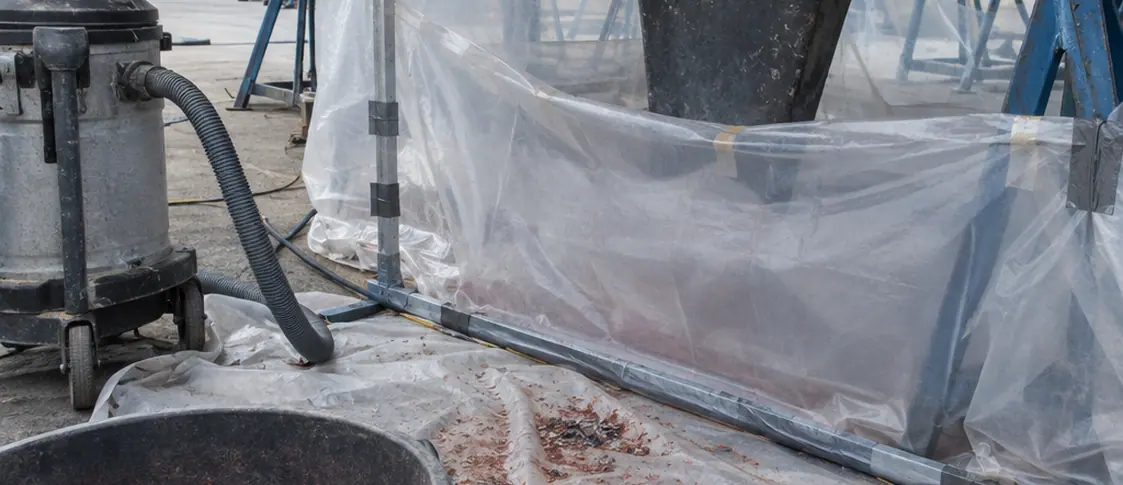
Pressure washing introduces a second, heavier pulse of pollutants. Blasting a hull at 3,000 to 4,000 PSI creates a dense wet-sand slurry. Biocidal fines mix with barnacle waste and sheet directly toward keel-block drains. Without a physical bund or a vacuum recovery system in place, this slurry enters the intertidal strip at the bottom of the slipway. The sheer force of the water atomizes the paint, creating a mist that settles on adjacent surfaces and eventually washes into the basin.
Managing Slurry MigrationOld coating layers and new application overspray both belong in contained waste. Capturing the slurry at the source prevents the heavy metals from binding to the porous concrete of the hardstand, where they become nearly impossible to extract.
The distinction between dry dust and wet slurry dictates the required containment strategy. Dry dust demands windbreaks and vacuum extraction. Wet slurry requires physical barriers and immediate liquid recovery. Failing to address both phases guarantees that a significant percentage of the removed antifouling will end up in the marina water.
Storm Runoff and Greywater Multipliers During the Wet Season
Yachts living on the hard continue to generate wastewater. Galley, shower, and laundry greywater, along with soap from deck washing, leave the vessel through cockpit scuppers and shore hoses. The June to December wet season acts as a major multiplier for these daily releases. Tropical downpours during 24- to 48-hour storm cycles remobilize yesterday's dust from cracked concrete.
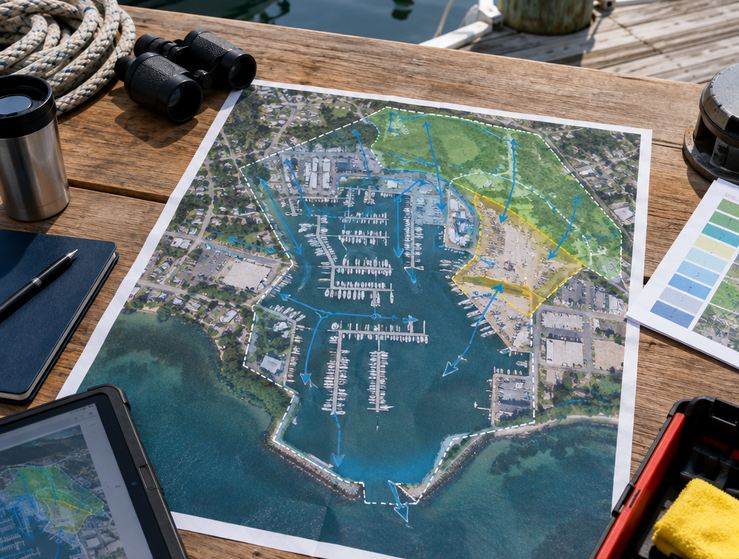
Yard managers mapped drainage gradients during heavy downpours to identify where dust pooled on cracked concrete before entering the basin grates. The resulting maps showed that even a clean freshwater rinse after painting carries dissolved biocides if the first sheets are not captured. The grated yard drains discharge directly into the same enclosed marina, turning a localized spill into a basin-wide contamination event.
The association's historical drainage maps show the routes water takes across the yards. Water seeks the path of least resistance, channeling through expansion joints and surface depressions. When a 48-hour storm cycle hits, the volume of water overwhelms minor surface imperfections, creating sheet flow that carries everything in its path. The combination of greywater discharge and storm runoff creates a continuous flushing mechanism that transports hardstand contaminants directly into the marine environment.
Pre-Haul Specifications for Independent Contractors
Establishing controls before the keel touches the blocks prevents liability disputes over cleanup. The association drafted a pre-haul specification checklist by separating owner responsibilities from contractor duties. Ground tarps require a 6-mil minimum thickness and must provide a 2 to 3 meters extension beyond the waterline. Edge bunds, vacuum sanders, sealed bags for flakes, and a designated wash-water collection point form the baseline requirements.
These pre-haul specifications apply strictly to visiting yachts managing their own independent contractors, as full-service yards with in-house labor operate under separate facility-wide environmental permits.
In-water limits apply while waiting for a haul-out slot. Underwater hull scrubbing clouds the berth and is strictly prohibited. Greywater tanks must remain closed if pump-out or holding facilities are available. Owners often complete their Single harmonised Immigration clearance form and notify the TTCG: Trinidad and Tobago Coast Guard of their mooring status before focusing on yard logistics. Sourcing heavy-duty tarps directly from a bonded warehouse ensures the materials meet the required thickness for rough concrete.
Defining Contractor BoundariesClear delegation of tasks ensures the briefing remains operational. Specify who supplies the shroud, who watches the drain during washing, and who physically removes the bagged waste before the end of the workday.
The success of these specifications relies on enforcement at the individual vessel level. When owners supply the correct materials and set clear expectations, independent contractors can execute the work without compromising the surrounding environment. The checklist serves as a practical tool for aligning the goals of the cruiser with the environmental standards of the facility.
Isolating Yacht Maintenance from Municipal Watersheds
A single 40-foot yacht footprint cannot remediate an entire basin. It can stop being a point source during its own maintenance window. The association defined the scope of its guidance by isolating individual yacht maintenance tasks from broader municipal watershed management, keeping expectations realistic for visiting cruisers.
Maintaining 10- to 15-meter buffer zones between hardstand projects prevents cross-contamination. Wind-borne dust from an adjacent, unprotected sanding job can easily settle on a properly contained site. Establishing these buffer zones creates a verifiable perimeter for each project, allowing yard managers to identify the source of any containment failures.
Several factors remain outside the control of the individual boat owner. Adjacent unprotected jobs, unbunded travel-lift wash-down areas, and municipal storm drains all contribute to the overall water quality. Acknowledging these shared limits keeps the briefing operational and prevents cruisers from assuming responsibility for systemic infrastructure challenges. The focus remains entirely on controlling the variables within the immediate footprint of the vessel.
Executing a 48-Hour Containment Plan for a Forty-Foot Cruiser
The containment plan was structured around a standard short-term haul-out schedule to ensure environmental compliance without extending daily yard fees for the owner. Consider a forty-foot cruiser booked for a 48-hour haul-out window to sand and recoat the bottom during a forecast wet-season break.
Day one begins before the boat leaves the water. Confirm the tarp and bund availability with the yard manager. Bag all spare sandpaper and secure any loose materials on deck. Empty the greywater holding tanks at a designated pump-out station to ensure no accidental discharges occur while on the hard. Photograph the drain path from the assigned blocks to the basin to document the baseline condition of the concrete. Write the 4-line contractor brief detailing who supplies the shroud, who watches the drain, who operates the vacuum, and who removes the waste before knock-off.
Day two executes the physical containment. Shroud the hull perimeter using the 6-mil tarps, ensuring the 2 to 3 meters extension is fully deployed and weighted against the wind. Vacuum-sand the old antifouling and bag all flakes before the lunch break. Capture the first wash sheets in the designated bund during the surface preparation phase. Keep all subsequent rinse water on the concrete slab to evaporate naturally in the afternoon heat. Inspect the travel-lift lane for stray copper dust. Only after sweeping the lane clear do you allow the hull to return to the water.