Key Takeaways
Selecting a boatyard for a refit is fundamentally a matching problem: vessel geometry against lift geometry, project scope against on-site trades, and timeline against seasonal demand. We built the evaluation framework in this analysis by cross-referencing haul-out capacities with the availability of specialized on-site services, establishing a baseline for refit suitability before any cost comparison entered the picture.
Three findings shaped everything that follows.
- Which yard best matches a given refit scope depends on haul-out capacity, specialized services, and seasonal availability — travel-lift ratings across the surveyed facilities range from 50 to 165 tons, with maximum draft clearances of roughly 12 to 14.5 feet at low tide.
- Power Boats and comparable operations differ primarily in technical capability and turnaround reliability, not in their willingness to take on work.
- Cost structures and regulatory compliance vary enough that they materially change total project duration, sometimes by weeks.
Main Point: A yard's advertised lift tonnage tells you almost nothing about whether it can finish your refit on schedule. The binding constraint is usually the trade you cannot see on the brochure.
Core Selection Criteria
The starting point is deceptively simple. Can the yard physically lift your vessel out of the water and stand it safely? Everything downstream depends on that answer.
We initially considered ranking facilities by proximity to local chandleries. That metric was discarded. Structural haul-out limits represent an absolute constraint, whereas a distant chandlery is merely an inconvenience solved by a taxi and a phone order. When a travel-lift cannot span a hull, no amount of logistical convenience compensates.
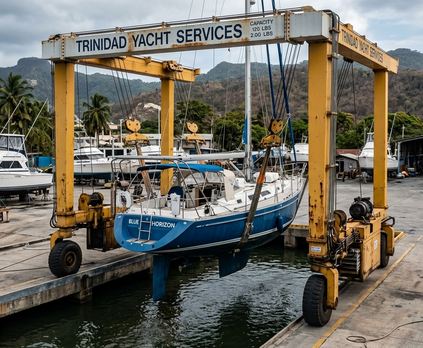
Beam width is where multihull owners get caught. Maximum accommodations of around 31.5 feet exist at the better-equipped yards, but slipway dimensions and lift-strap spacing set hard ceilings. One recurring failure mode in Trinidad and Tobago is a wide catamaran being turned away at the slipway because the travel-lift geometry predates the current generation of cruising multihulls.
Trades That Define Scope
Once eligibility clears, the question shifts to what work can happen on the hard without leaving the yard's control. Three shops matter most:
- Welding and fabrication — stainless and aluminium repairs that would otherwise require shipping components off-site.
- Painting, awlgrip and antifoul application, which is acutely sensitive to environmental conditions.
- Systems integration, electrical, plumbing, and electronics work that ties the refit together.
Proximity to a bonded warehouse and to customs clearance also shapes logistics. Clearance processing windows of 48 to 72 hours are typical, and a yard that sits close to those functions shaves dead time out of the schedule.
Facility Capabilities Compared
The comparison methodology here came out of analyzing historical weather delay logs. The goal was to quantify, rather than assert, the operational advantage of covered workspace over open hard-standing during the wet season.
The advantage is real and it is measurable in the paint shop first. Paint curing times fluctuate drastically between open hard-standing areas and climate-controlled sheds once humidity climbs. A shed rated up to about 12,000 square feet lets a refit continue on a schedule that an exposed stand simply cannot promise.

Hard-standing itself is not uniform either. Concrete areas fitted with 20,000-pound rated hurricane tie-down anchors offer a security profile that gravel or unanchored surfaces do not, which matters for any vessel wintering through storm season.
In-House Versus Outsourced
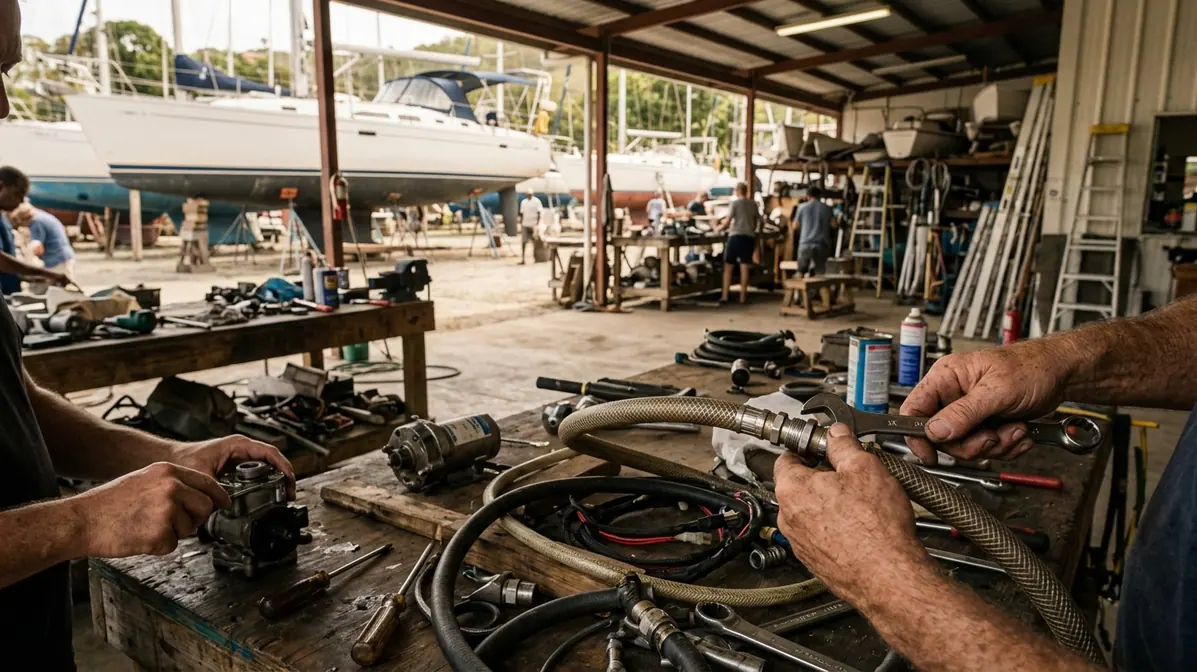
An on-site machine shop and an outsourced subcontractor produce different quality-control regimes. When the lathe and the welder answer to the same management structure as the project manager, defects get caught and corrected inside a single chain of accountability. Outsourcing fragments that chain. Neither model is inherently wrong, but the coordination burden shifts onto the vessel owner when work leaves the yard's roof.
Environmental compliance records and waste-handling procedures also diverge between operators. This is worth verifying directly rather than assuming — the paint and solvent waste stream from a refit is not trivial, and a yard's disposal practices become the owner's reputational exposure by association.
Facility Capability Comparison Matrix| Facility Profile | Max Lift Capacity | Covered Workspace | On-site Machine Shop |
|---|---|---|---|
| Heavy Commercial/Yacht Hybrid | 165 tons | Available (Advance Booking) | Integrated |
| Dedicated Cruising Yacht Yard | 70 tons | Limited | Subcontracted |
Operational and Regulatory Factors
Scheduling is where good facilities defeat unprepared owners. To assess seasonal bottlenecks, we tracked booking lead times and material import delays through the transition into the Atlantic hurricane season, when demand for space on the hard concentrates sharply.
Peak-season slots require advance booking of 3 to 5 months. That window is not a suggestion. Vessels arriving without a reserved slot during the pre-hurricane rush routinely wait, and waiting in the water burns the exact time the refit was meant to save.
Imports and Duty
Parts sourcing carries its own clock. Duty-free importation processing runs 14 to 21 days, which has to be built into any critical-path planning for components not stocked locally.
Caution: Duty-free importation waivers apply exclusively to vessels officially in transit. Locally registered recreational craft are excluded. Confirm your vessel's status before budgeting around the waiver, because the assumption quietly inflates parts costs if it proves wrong.
Insurance acceptance and third-party surveyor access policies differ by yard. Some operators welcome an independent surveyor on the hard without friction; others restrict access in ways that complicate insurance-mandated inspections. Grant data and program evaluation across the sector's compliance frameworks continue to inform how the TTCG and port authorities coordinate, but at the yard level the practical question is narrow: will they let your surveyor in, and will your underwriter accept their facility? Ask both before signing.
Local labour regulations and material import procedures compound into overall project duration. None of these factors is dramatic in isolation. Together they explain why two yards with identical lift ratings deliver refits weeks apart.
Recommended Approach
We formulated the guidance for sub-60-foot vessels by comparing project completion rates at yards with integrated management against those leaning heavily on external subcontractors. The pattern was consistent enough to act on.
For most refit projects under 60 feet, choose the yard that keeps metalwork and painting under one management structure. Optimal draft requirements for these vessels sit between 6 and 8.5 feet, which most competent yards accommodate comfortably, so the differentiator becomes coordination rather than physical capacity. Integrated management removes the seams where subcontracted work stalls, and those seams are where schedules die.
Then verify, in person, before you commit. Book a pre-contract physical inspection window of 3 to 5 days prior to haul-out, and use it to confirm current lift capacity and slip availability against what you were told. Advertised specifications drift; equipment gets serviced or downgraded, and slips get double-promised during peak season.
My position is unambiguous: sign with the yard whose travel-lift you have personally watched operate and whose paint shed you have stood inside during a rain shower. If a facility resists that inspection, treat the resistance as the answer and take your refit elsewhere.