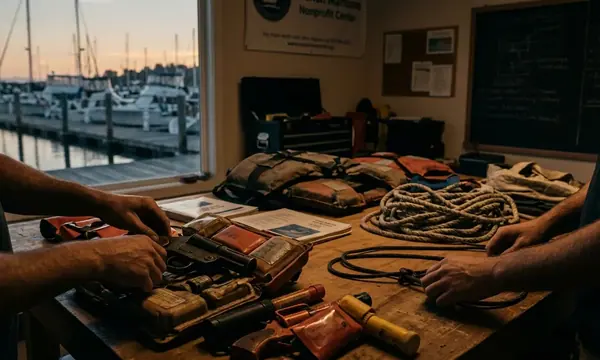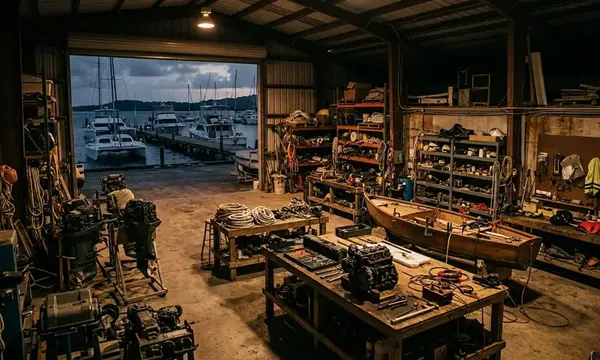
Chaguaramas tempts cruisers into a dangerous assumption: because the harbor sits south of the main Caribbean hurricane belt, preparation can wait until a named system is already being tracked. That assumption is expensive. The safer reading is comparative, not casual: Trinidad and Tobago offers meaningful advantages for seasonal storage, but those advantages only hold when the boat, the insurer, the marina, and the emergency chain all describe the plan in the same terms.
Quick Nav
- Consequences of Inadequate Hurricane Preparation
- Core Preparation Principles
- Terminology for Local Conditions
- Regional Storm Records and Patterns
- Official Coordination and Expert Sources
- Step-by-Step Application for a 42-Foot Sloop
Consequences of Inadequate Hurricane Preparation
The loss is often financial before it is physical
The first argument for a Chaguaramas hurricane plan is not romance about seamanship. It is insurance language.
Named windstorm deductibles in the Caribbean basin frequently move from a standard 2% of hull value to somewhere between 10% and 20% when a vessel remains in the water during a strike. That difference changes the owner’s risk posture immediately. A boat that survives with damaged rigging, flooded lockers, or a compromised engine room can still put a cruising budget into distress if the policy treats the decision to stay afloat as a breach of the hurricane plan.
Physical damage compounds that problem. Surge exposure can drive hulls against pilings, put load into cleats never meant for storm strain, and turn loose gear into impact tools. Once the storm passes, the repair queue becomes its own hazard. Regional supply chain bottlenecks can push post-storm repair slots into a range of roughly 8 to 14 months, which is long enough to erase an entire cruising season.
Main Point: In Chaguaramas, preparation is not just about saving the yacht from wind. It is about keeping the claim, the haul-out record, and the repair pathway intact.
Schedule disruption has a hard edge
Cruisers often talk about weather windows as if the only deadline is departure. Hurricane preparation adds another clock: when the yard can haul, when straps are available, when labor can strip the rig, and when the insurer expects documentation. A delay of a few days can push a boat from controlled storage into reactive securing, and reactive securing is where mistakes cluster.
Core Preparation Principles
Start with the Hurricane Box, not the travel lift
I begin with the policy boundary because the yard plan only matters if it satisfies the document that will govern the claim. Insurance Hurricane Box language typically spans from 10 degrees North to 35 degrees North latitude, but the southern boundary is not uniform. Some policy definitions place that line near 9.5 degrees North, while others use a boundary closer to 12.4 degrees North. Trinidad and Tobago sits in the zone where that small textual difference matters.
Before arrival, read the navigation limit, storm plan clause, named windstorm deductible, and lay-up requirements as one package. If the insurer requires storage on the hard, an in-water mooring in Chaguaramas is not an equivalent substitute just because the harbor is sheltered.
Reduce windage before the yard is busy
Windage reduction is slow, physical work. Stripping a vessel properly means removing all canvas, roller furling sails, and running rigging. For a crew of two, that takes somewhere between 18 and 24 hours of continuous labor when done cleanly and packed for reinstallation.
This is where many owners underestimate the task. A dodger looks small until it starts acting like a lifting surface. A roller furling genoa left in place may appear secure at the dock, but under storm gusts it can load the foil, headstay, masthead fittings, and deck hardware in one sequence. The aim is to reduce the area that the wind can grab, not merely to tie the area tighter.
Expert Tip: Treat windage work as a pre-haul task. Once the boat is blocked and strapped, climbing, sail handling, and deck movement become slower and more hazardous.
Prefer approved on-the-hard storage
For Chaguaramas planning, on-the-hard storage is the central control measure. Mangrove tie-offs are not a practical alternative; local environmental regulations now strictly prohibit damaging coastal root systems. That removes an old regional tactic from the responsible planning menu.
Approved facilities matter because they control the ground surface, jackstand placement, deadmen, strap inventory, and yard access during emergency directives. The phrase “on the hard” should mean more than “not floating.” It should mean blocked, braced, strapped, recorded, and accessible to yard staff under a storm procedure.
Terminology for Local Conditions
Hurricane Box
Surveyors and adjusters use “Hurricane Box” as a coverage term before they use it as a weather term. That distinction is easy to miss. A skipper may think of the box as a broad seasonal warning area, while the insurer may treat it as a contractual boundary that activates storage duties, deductibles, or exclusions.
For Trinidad and Tobago, the important question is not whether Chaguaramas is safer than many northern islands. It is whether the policy language recognizes the chosen storage method as compliant inside the defined coordinates.
Windage
Windage calculations factor in the square footage of exposed mast and hull. A standard 40-foot sloop can generate over 1,200 pounds of windage load in 65-knot gusts. That load is not abstract; it travels into jackstands, straps, cleats, rigging terminals, and hull contact points.
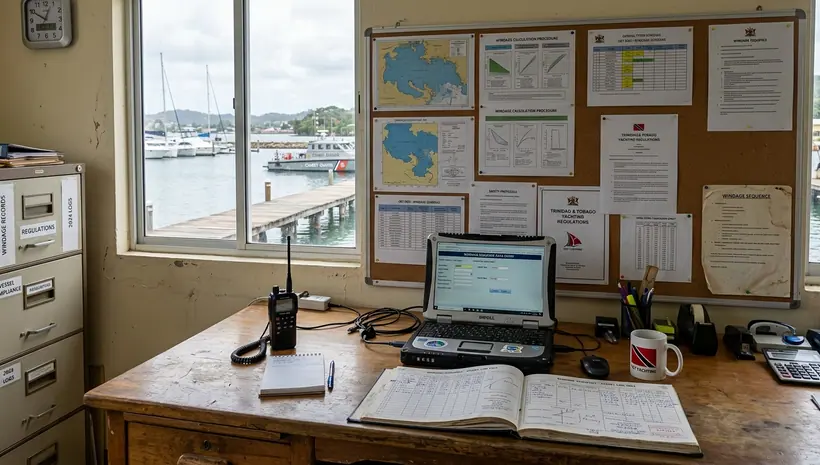
Removing canvas and sails reduces the exposed area. Securing halyards away from the mast reduces slap and vibration. Taking down running rigging lowers clutter aloft and removes small lines that can flog themselves into failure.
On-the-hard protocols
On-the-hard protocols require vessels to be strapped to concrete deadmen using ratchet straps with a minimum 10,000-pound breaking strength. Jackstands alone are not enough, especially where torrential rain can soften an unpaved boatyard surface. One of the uglier failure modes is simple: the pad sinks, the stand angle changes, the hull shifts, and the adjacent stands inherit load they were never meant to carry.
A competent setup spreads support, prevents lateral movement, and keeps the hull from walking under gust cycles. Photograph it while the yard crew is still present.
Regional Storm Records and Patterns
Chaguaramas is safer, not exempt
The historical record argues for disciplined planning rather than alarm. The 1933 system brought sustained winds exceeding 85 knots to the southern peninsula of Trinidad. The 1963 event affected Tobago, with storm surge in the region reaching somewhere between 1.8 and 2.4 meters above mean high water.
Those two records carry different planning lessons. The 1933 case speaks to direct wind exposure farther south than many visiting cruisers expect. The 1963 case shows how surge can matter even when the most memorable damage is discussed elsewhere. For Chaguaramas harbors, that combination supports a conservative yard strategy: reduce the sail area presented to the wind, get the hull out of surge reach when required by the plan, and avoid storage assumptions based solely on latitude.
What the records change in practice
Historical tracks do not tell a skipper which storm will arrive next. They do help test weak habits. If the plan depends on last-minute labor, it is brittle. If it depends on a perfect VHF signal inside every bay, it is brittle. If it depends on a policy interpretation never confirmed in writing, it is brittle.
The better response is mundane and repeatable: plan before the season, reserve hard-stand space early, strip windage before the yard backlog forms, and keep the insurance file complete enough for a tired adjuster to follow after the storm.
Official Coordination and Expert Sources
Build one chain of command
Official coordination begins with the Office of Disaster Preparedness and Management. ODPM issues maritime evacuation and securing orders within a 48 to 72-hour window before projected landfall. Local marina operators also require vessel owners to submit hurricane plans between June 1 and June 15 each year.
That sequence gives visiting cruisers a practical structure. The marina needs to know whether the boat is occupied, where the owner can be reached, who may authorize movement, and whether the yacht will be hauled or secured in place. The TTCG: Trinidad and Tobago Coast Guard may become relevant during restricted movement, evacuation messaging, or harbor control, so the vessel’s documents should remain easy to retrieve. I keep copies of the Single harmonised Immigration clearance form, vessel registration, insurance certificate, and yard contract in the same storm file, with any Bonded warehouse receipts separated but indexed.
Caution: ODPM maritime alerts are broadcast on VHF Channel 16, but terrain shadowing in some Chaguaramas bays can block reception. Satellite weather routing is not a luxury backup in those pockets; it is part of the communications plan.
Citations
- Monitoring reports show ODPM’s pre-landfall notification window as the controlling public alert period for maritime securing and evacuation actions.
- Stakeholder feedback indicates that Don Street publications remain useful for understanding regional seamanship practices, especially when cross-checked against current marina rules.
- Program evaluation revealed that accounts compiled in Passagemaker Mag are most valuable when used as incident narratives, not as substitutes for local instructions.
For this topic, the weak point is local reception: a plan only works if the owner can receive and act on the order in the bay where the boat actually lies. That is why official alerts, yard instructions, insurance language, and weather routing belong in the same working folder rather than in separate mental compartments.
Step-by-Step Application for a 42-Foot Sloop
A copyable sequence for late-season arrival
Use this example for a 42-foot sloop arriving in Chaguaramas close to hurricane season with the owner aboard and a haul-out required by the policy.
- Day 1, morning: Confirm the policy’s Hurricane Box boundary and named windstorm deductible. If the southern line differs from the charted position of the boat, ask the insurer or broker to confirm the storage expectation in writing.
- Day 1, afternoon: File the marina hurricane plan if the date falls within the June 1 to June 15 submission window, or submit it immediately on arrival if late. Include owner contact details, local emergency contact, haul-out preference, and permission for yard movement if the owner is off site.
- Day 2: Remove canvas, dodger panels, bimini cloth, roller furling sails, spare halyards, and loose running rigging. A two-person crew should reserve 18 to 24 hours of continuous labor for a clean strip-down, packing, and labeling process.
- Day 3: Haul the vessel when the travel lift slot opens. The complete haul-out, power-washing, blocking, and strapping sequence should be planned as a 3 to 5-day operational window because lift availability can change quickly once forecasts harden.
- During blocking: Require straps to concrete deadmen with ratchet straps meeting the minimum 10,000-pound breaking strength requirement. Do not accept jackstands on soft, unpaved ground without a yard-approved load-spreading method.
- Before leaving the yard: Photograph all 6 to 8 jackstand placements and each strap tension point for the insurance underwriter. Capture the keel blocks, hull contact pads, strap angles, deadmen, and any chafe protection.
- Final file: Store the photos with the insurance certificate, marina plan, clearance form, yard invoice, and emergency contact sheet. Keep one digital copy available offline and one copy with a shoreside contact.
For a practical setup, name the folder “42-foot sloop Chaguaramas hurricane file,” then place the photos in this order: port bow stand, starboard bow stand, port midship stand, starboard midship stand, port quarter stand, starboard quarter stand, keel blocking, forward strap, aft strap. Email that pack to the marina office and the underwriter the same day the straps are tensioned.