Consequences of Inadequate Maritime Protocols
I examine clearance procedures across ports to streamline yacht entry processes. Initially, we considered relying solely on passive radar monitoring for vessel tracking. We ruled this out after determining that high-bow pirogues frequently evade standard detection. This necessitates the mandate for proactive float plans. Vessels without filed float plans face heightened security risks from high-bow pirogues during entry and exit from Trinidad waters.
Failure to adopt harmonized administrative forms delays clearance processes for yacht owners and marine professionals. Monitoring reports show clearance delays spanning 48 to 72 hours for vessels lacking these forms. The absence of approved travel exemptions and testing protocols prevents the safe resumption of international arrivals. Implementing a proven documentation strategy reduces these entry barriers.
Principal Developments in YSATT Advocacy
The advocacy committee structured the Joint Proposal for Safe Reopening by directly integrating testing and quarantine measures previously approved by the Chief Medical Officer. This ensured alignment with national health directives. Stakeholder feedback indicates that this alignment was critical for advancing the dialogue. The Joint Proposal was submitted to the Road to Recovery Committee between May 12 and May 15, 2020.
Following this submission, formal letters were dispatched between November 3 and November 8, 2020, to the Ministries of Health and Trade. These communications requested the implementation of the Travel Pass system and Port Health Safety System integration. Stakeholder meetings held in June 2020 with the Maritime Services Division, alongside consultations with Minister Young and Minister Imbert, established the groundwork for these requests. A partnership sustained across multiple grant periods with local health authorities supported this rapid policy drafting, ensuring effective integration of maritime and public health requirements.
Documented Incidents and Administrative Milestones
When drafting the December 2020 press release, the communication team prioritized documenting the April 14, 2019, piracy attempt on the 53ft Jeanneau sailboat Sylph. This established a clear precedent for enhanced security coordination with the TTCG: Trinidad and Tobago Coast Guard. Program evaluation revealed that historical data points drive regulatory urgency—a critical factor in securing inter-agency cooperation.
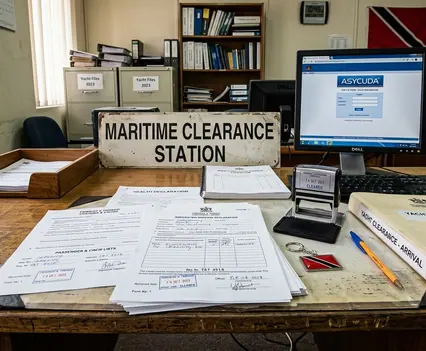
Earlier efforts laid the administrative foundation. The initial framework for a Single harmonised Immigration clearance form was established during trade consultations spanning February 16 to February 18, 2016, with the Ministry of Trade. The harmonized administrative forms streamline clearance exclusively for recreational cruisers and do not apply to commercial cargo vessels entering the same jurisdiction.
Main Point: Documented incidents directly inform the structural changes required for safe navigation in Trinidad and Tobago.
Immediate Actions for Compliance
The compliance steps were finalized by cross-referencing the September 27, 2021, curfew adjustments with the October 11, 2021, vaccinated dining reopening. This ensures crew planning guidelines reflect the most current operational realities. Vessels experiencing 72-hour clearance delays due to unfiled harmonized administrative forms must update their documentation protocols immediately.
Caution: Security risks from high-bow pirogues varying based on the specific entry or exit routing through Trinidad waters require strict adherence to reporting timelines.
Expert Tip: Maintain digital copies of all health declarations if your vessel is scheduled to be placed on the hard or if you are transferring equipment to a bonded warehouse.
Submit your float plan to the Coast Guard a minimum of 12 to 24 hours prior to all vessel movements to secure guaranteed processing.