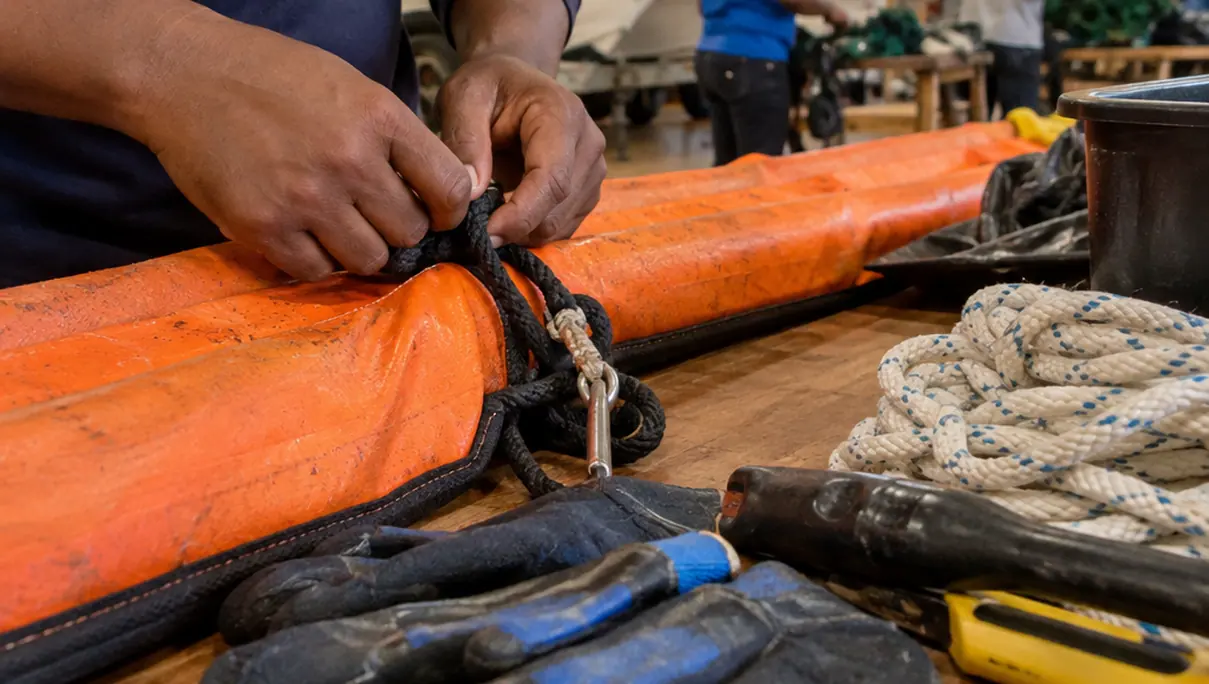
December 2013 Made the Log the First Line of Defence
The December 2013 Gulf of Paria spills showed that a contamination record opened on the first report of oil is what later decides haul-out, insurance, and whether a yacht can show a clean systems history. When hydrocarbons enter tidal circulation in semi-enclosed waters, the physical defense of a vessel depends entirely on administrative speed. Waiting until a dark slick or iridescent sheen appears alongside the dock surrenders the evidentiary baseline required by marine surveyors and underwriters.
In the wake of the December 2013 events in Trinidad and Tobago, cruisers, marina managers, and boatyard operators recognized that proving an absence of internal fouling requires verifiable timestamps. Three instruments mattered for yachts, marinas, and boatyards during that window: a timed contamination log, immediate seawater-intake closure, and a haul-out decision made while the film was still moving.
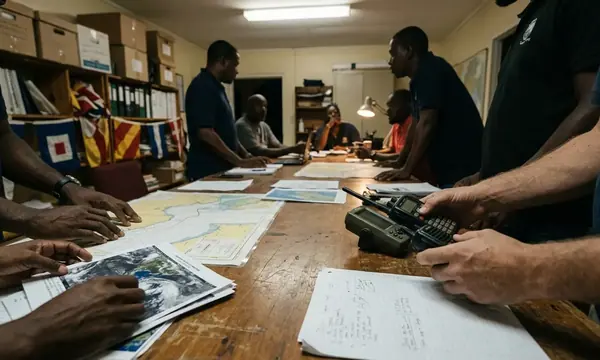
Establishing this timeline begins the moment an initial alert circulates over VHF or through local maritime channels, long before waterborne residue reaches the northern yachting basins. A captain who opens a dedicated log page upon the first report of a gulf release creates an auditable trail of preventive custody. That record connects regional environmental alerts with recorded actions aboard the yacht.
Three Gulf Spill Instruments
- Timed Contamination Log: Open a dedicated incident ledger upon the very first report of oil in the gulf, anchoring all subsequent vessel actions to an external timestamp rather than waiting for visible sheen at the berth.
- Seawater-Intake Closure: Shut and tag all raw-water seacocks—covering main engine cooling, generator circuits, watermakers, and deck-wash pumps, to isolate internal plumbing from subsurface hydrocarbons.
- Pre-Sheen Haul-Out Decision: Commit either to lifting the vessel onto the hard before moving surface film reaches the travel-lift well, or to remaining afloat with sealed intakes until the yard and owner jointly verify water quality.
Oil on the La Brea Shore, and What the Gulf Still Held
Reconstructing the December 2013 spill sequence in the Gulf of Paria requires separating public remediation geography from the hydrodynamic reality faced by cruising vessels. The public shoreline response concentrated heavily at La Brea in southwestern Trinidad, where visible coastal fouling demanded immediate containment and beach cleanup. However, marine service providers and environmental monitors had to track the incident along two distinct operational clocks.
The first clock governed the shoreline response at La Brea. The second governed the vessel-systems exposure across the wider Gulf of Paria, where tidal currents, wind shifts, and subsurface mixing carried dissolved and suspended residue toward marinas, anchorages, and boatyards far removed from the southwestern beaches.
A shoreline response concentrated at La Brea did not exhaust the exposure of yachts, marinas, and boatyards still afloat or on the hard elsewhere in the gulf. Waterborne hydrocarbons separate into fractions; while heavy weathered product grounds on coastal beaches, lighter emulsions and subsurface plumes travel with the tidal stream. Even vessels sitting on the hard faced indirect operational bottlenecks, as launch schedules stalled and travel-lift slips closed to prevent cross-contamination of yard infrastructure.
Drawing on post-incident berth logs compiled by marina operators across the northern basins, I observed how quickly a distant coastal emergency turns into an immediate basin management crisis. Vessels moored miles away from the primary remediation zone still shared the same semi-enclosed body of water during the December 2013 incident period and the subsequent weeks of tidal circulation. Relying on news broadcasts from La Brea to judge water safety at a northern marina berth invited severe miscalculation, because unseen waterborne residue moves independently of shoreline cleanup milestones.
A Seawater Intake Will Drink What the Eye Misses
Surface observation from a cockpit or finger pier is a poor metric for raw-water purity. Cooling circuits, genset plumbing, watermaker membranes, and deck-wash intakes sit beneath the waterline, where they can draw oil aboard long after a surface sheen has dispersed or passed the dock. Subsurface hydrocarbon droplets and emulsified residue remain suspended in the water column, invisible to a routine visual check of the hull.
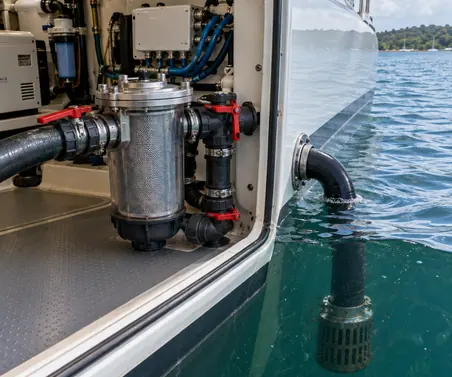
Protecting a yacht's internal systems demands a strict mechanical sequence executed before waterborne residue enters the basin:
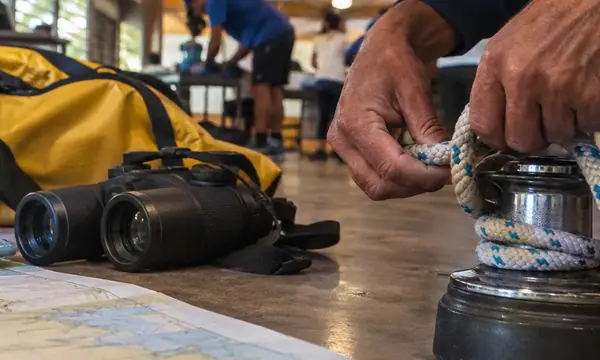
- Close Seacocks: Shut the hull valves for main propulsion cooling, auxiliary generators, reverse-osmosis watermakers, air-conditioning pumps, and raw-water deck or anchor washes.
- Isolate Strainers: Secure raw-water strainer baskets and verify that upstream valves hold tight without weeping.
- Tag the Closure Time: Attach physical warning tags to closed valve handles and record the exact hour of closure in the vessel's contamination log, anchored to the initial gulf report.
- Hold Circuits Shut: Keep all raw-water circuits isolated until the boatyard and the vessel owner jointly inspect the basin and agree that the surrounding water is fit for intake.
Captains frequently misread exterior cleanliness as proof of mechanical safety. A clean topsides wash provides zero evidence that the subsurface intake path stayed clean. If a generator or air-conditioning pump cycles automatically while emulsified residue passes beneath the keel, hydrocarbons coats heat exchangers, degrades rubber impellers, and ruins watermaker membranes before any staining appears on the gelcoat.
Raw-Water Restart Hold
Never rely on a clear waterline or a spotless topsides rinse to clear internal plumbing for operation. Keep every seacock tagged shut until both the marina operator and the owner log a joint visual and olfactory clearance of the berth water.
Hauling Out Before the Film Reaches the Travel-Lift
During a gulf spill sequence, hauling a vessel out of the water ceases to be a routine scheduling slot and becomes an acute contamination control decision. Once a moving surface film reaches the marina basin and coats a vessel's waterline, lifting that hull transfers oily residue directly onto the travel-lift slings, the blocking pads, and the concrete apron of the yard deck.
That secondary transfer turns a single fouled hull into a systemic boatyard hazard. Consequently, the operational decision window is restricted to the hours between the initial gulf alert and the arrival of moving surface film at the travel-lift well.
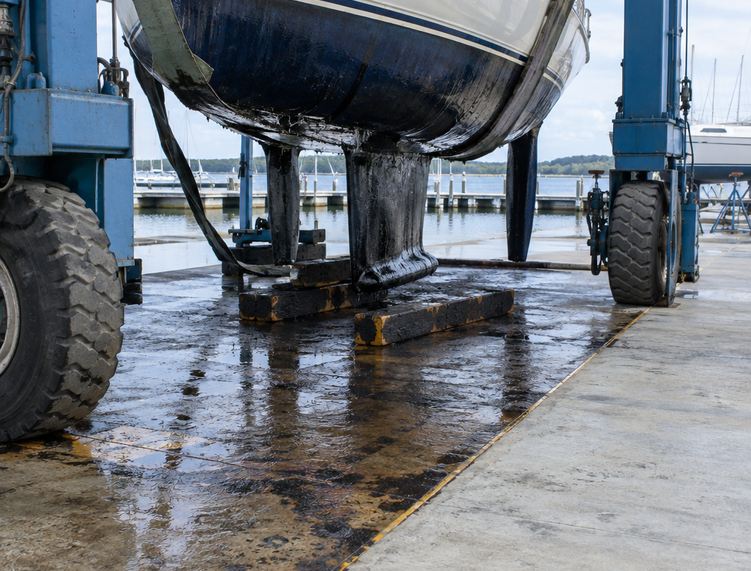
Owners and yard managers must weigh two distinct pathways, each demanding specific entries in the contamination log. The first option is an early lift: hauling the yacht onto the hard while the basin water remains verified clean, immediately removing the hull and its through-hull fittings from waterborne exposure. The log must reflect the pre-sheen lift time and confirm that the travel-lift well was free of film during recovery. The second option is to stay afloat with all intakes closed and tagged. When surface film has already reached the hauling well, staying in the berth prevents the hull from passing through the concentrated surface layer on the slings, provided the vessel can operate without raw-water cooling or shore-side air conditioning.
To protect vessels already stored on the hard and maintain environmental compliance, boatyards enforce three strict physical controls during spill alerts:
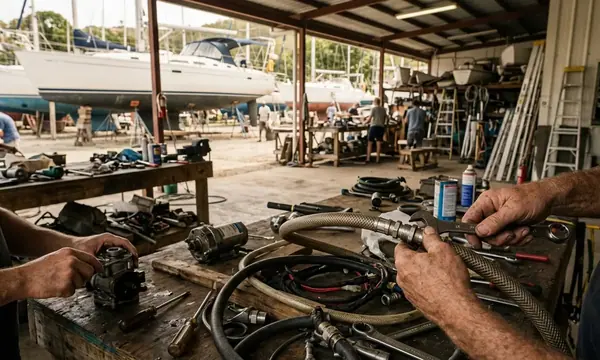
- Sling and Pad Inspection: Yard crews inspect travel-lift webbing and timber or steel blocking pads between every single lift, halting operations immediately if hydrocarbon transfer is detected.
- Segregated Wash Water: Runoff from the wash-down bay is isolated from general storm drains to prevent hydrocarbons from cycling back into the basin or fouling yard treatment traps.
- Hold on Bottom Washing: Yards place an immediate hold on routine high-pressure bottom washing until the exact source of any waterline stain is examined and recorded in the yard file.
These protocols limit contamination of yard equipment and facilities. When replacement parts or specialized sorbents must be cleared from a bonded warehouse to repair fouled plumbing, or when a visiting vessel prepares its single harmonised Immigration clearance form for departure, having an uncompromised hull on clean blocking pads avoids protracted regulatory delays.
Environmental Reports a Marina Can Defend Later
Months or years after an environmental incident, a yacht's resale value and insurance underwriting often hinge on the paperwork assembled while the vessel sat in Trinidad and Tobago. A verbal assurance that a yacht escaped fouling during the December 2013 sequence carries little weight during a rigorous pre-purchase survey. Marinas and boatyards protect both their own facilities and their berthed clients by assembling a standardized, defensible incident file at the time of exposure.
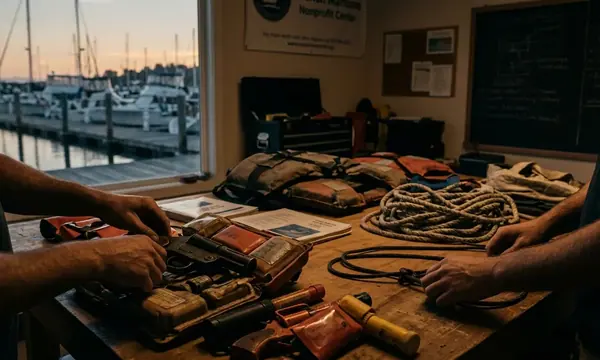
A comprehensive yard file must capture five specific entries:
- Time of First Gulf Report: The exact hour the facility or vessel logged the initial regional alert of a hydrocarbon release.
- Time Intakes Were Closed: The verified timestamp showing when raw-water seacocks and strainers were shut and tagged aboard the yacht.
- Haul-Out or Stay-Afloat Decision: The recorded rationale and timestamp for either lifting the vessel ahead of the film or keeping it berthed with sealed plumbing.
- Observations at the Berth: Timed, dated visual notes detailing water condition, tidal flow, and the presence or absence of sheen alongside the hull and inside the travel-lift well.
- Notification Log: A precise register of who was notified, including vessel owners, yard management, underwriters, and maritime authorities such as the TTCG: Trinidad and Tobago Coast Guard.
Clear boundaries govern how these internal logs function within the broader regulatory framework. A yacht-services association can set a member reporting standard for owners and yards; it does not replace statutory notification to the competent public authority, and it cannot certify a hull free of residue. Maintaining that distinction is vital for operational credibility.
By separating internal member practice at the marina from the public shoreline response at La Brea, boatyards create an objective record of local berth custody. When an insurance surveyor reviews the maintenance file during renewal cycles, the presence of synchronized berth timestamps demonstrates disciplined risk management without overstepping into statutory certification.
La Brea, December 2013, Still Sits in the Yard File
The enduring legacy of the Gulf of Paria incident for the yachting sector lies in how vessel histories are audited. Surveyors, underwriters, and boatyard managers evaluating yachts that operated in Trinidad and Tobago during that period continue to judge maintenance files by four practical benchmarks: timed contamination records, verified seawater-intake isolation, pre-sheen haul-out decisions, and standardized marina environmental reporting.
These four practices document the vessel's precautions and exposure. Opening the log upon the first regional alert establishes the timeline; shutting and tagging the seacocks protects the internal heat exchangers and membranes; respecting the travel-lift transfer boundary preserves the yard's slings and wash bays; and filing structured berth observations secures the administrative record.
A shoreline cleanup record from La Brea does not establish when a Gulf of Paria yacht's raw-water intakes were closed or whether its hull was lifted before oil reached the travel-lift well.